Fibroids and Fertility: Can You Get Pregnant and What Are the Risks?

Fibroids and fertility are a topic of conversation that many women do not want to have, but find themselves having far sooner than they expected. One of the first questions most women ask is: Will this stop me from getting pregnant?
The honest answer is: it depends. The type of fibroid you have, where it is located, and how large it is all play a role. But fibroids do not automatically mean infertility, and many women with fibroids go on to have healthy pregnancies.
If you have just been diagnosed with fibroids and babies are on your mind, the first thing I want you to know is this: take a breath. A fibroid diagnosis is not a full stop on your dream of having children.
But I also know that “don’t worry” without any real explanation is not helpful. So let’s actually talk about it.
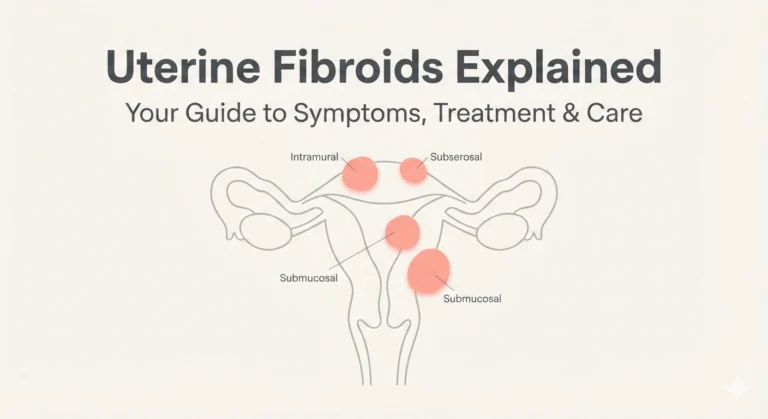
Are you new to fibroids entirely? Start here: Read our full overview → Uterine Fibroids Explained: Your Central Guide. This guide walks you through everything you need to know — from how fibroids affect conception, to what happens during pregnancy, to when removal may be recommended.
So, Do Fibroids Affect Fertility?
Fibroids affect fertility differently depending on their location inside or around the uterus. Fibroids and fertility are connected, but not in the devastating way most women fear when they first hear the diagnosis. Research shows that fibroids are the sole cause of infertility in only 2 to 3 percent of women. That means for the vast majority of women with fibroids, something else is also going on — or nothing else is wrong at all, and they go on to conceive without any issues. What matters most is not whether you have fibroids, but where they are sitting inside or around your uterus. Location is everything here.
Submucosal Fibroids — These Are the Ones to Watch
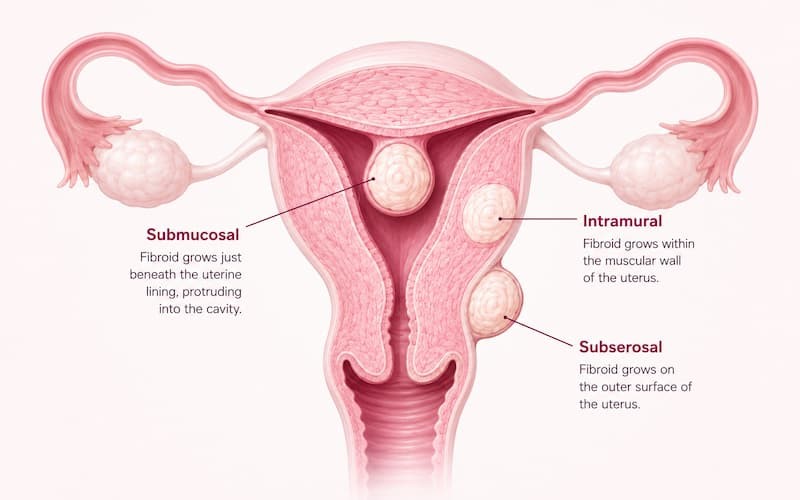
Submucosal fibroids grow just beneath the inner lining of the uterus and push into the uterine cavity — the space where a baby grows. These have the strongest evidence for affecting fertility. Think of it this way: if your uterine cavity is like a room, a submucosal fibroid is a piece of furniture sitting right in the middle of it. It gets in the way.
These fibroids can interfere with implantation, make it harder for an embryo to attach to the uterine wall, and increase the risk of miscarriage. The good news is that removing them — usually through a minimally invasive procedure called hysteroscopic myomectomy — has been shown to significantly improve pregnancy rates.
Intramural Fibroids — The Uncertain Middle Ground
Intramural fibroids grow within the muscle wall of the uterus itself. Whether they affect fertility depends largely on their size and whether they are pushing into or distorting the uterine cavity. Fibroids larger than 5cm are more likely to cause concern. The evidence here is less clear-cut, and doctors tend to make recommendations on a case-by-case basis rather than applying a general rule.
Subserosal Fibroids — Least Likely to Cause Problems
Subserosal fibroids grow on the outer surface of the uterus. Research consistently shows that these do not significantly affect fertility or pregnancy outcomes. Unless they are causing you other symptoms, removing them solely to improve your chances of conceiving is generally not recommended.
Can You Get Pregnant With Fibroids?
Yes — and this is important to say clearly. The majority of women with fibroids can and do get pregnant. The conversation around fibroids and fertility is not about whether pregnancy is possible. However, the likelihood depends on the fibroid type, location, and size, as well as other fertility factors unique to each woman.
By understanding your specific situation, you can make informed decisions with your doctor.
Fibroids being the sole cause of infertility is relatively rare, occurring in an estimated 2 to 4 percent of women with infertility. In most cases, other factors are involved alongside fibroids, and a thorough fertility assessment will look at the full picture before drawing any conclusions.
When Should You Be Concerned?
There are some situations where it is worth having a more urgent conversation with a specialist:
- You have been trying to conceive for 12 months or more without success (or 6 months if you are over 35)
- You have submucosal fibroids that are distorting the uterine cavity
- You have a history of recurrent miscarriage
- You have multiple large intramural fibroids.
📝If any of the above apply to you, please speak with a gynaecologist or fertility specialist. Imaging — usually an ultrasound or MRI — is needed to assess your situation. Do not try to piece this together from symptoms alone.
Should You Remove Fibroids Before Trying to Conceive?
This is one of the most common questions that comes up when discussing fibroids and fertility — and the answer is genuinely not a simple YES or NO. It depends on your fibroid type, size, location, age, symptoms, and how long you have been trying.
When Doctors Typically Recommend Removal First
- Submucosal fibroids that are distorting the uterine cavity
- Multiple large fibroids causing significant symptoms
- Previous miscarriages that appear to be linked to fibroid location
- Fibroids larger than 5cm in an intramural position that affect the cavity.
When Watchful Waiting Makes More Sense
- Small fibroids that are not distorting the uterine cavity
- Subserosal fibroids with no impact on the cavity
- No symptoms and no previous fertility complications.
Fertility-Preserving Treatment Options
If removal is recommended and having children is part of your plan, these are the options typically considered:
- Hysteroscopic Myomectomy — removal of submucosal fibroids through the cervix, no incision required, and generally the least invasive option.
- Laparoscopic Myomectomy — minimally invasive removal of intramural or subserosal fibroids.
- Open Myomectomy (Abdominal) — used for larger or multiple fibroids, requires a longer recovery but preserves the uterus.
📝One important note: Uterine Fibroid Embolisation (UFE) is generally NOT recommended for women who want to conceive. It works by cutting off the blood supply to fibroids, but this can affect the uterine lining and ovarian reserve, which matters enormously when you are trying to get pregnant.
Do you want to compare all your treatment options in detail? → Fibroids Treatment Options: A Clear Comparison
What Happens If You Get Pregnant With Fibroids?
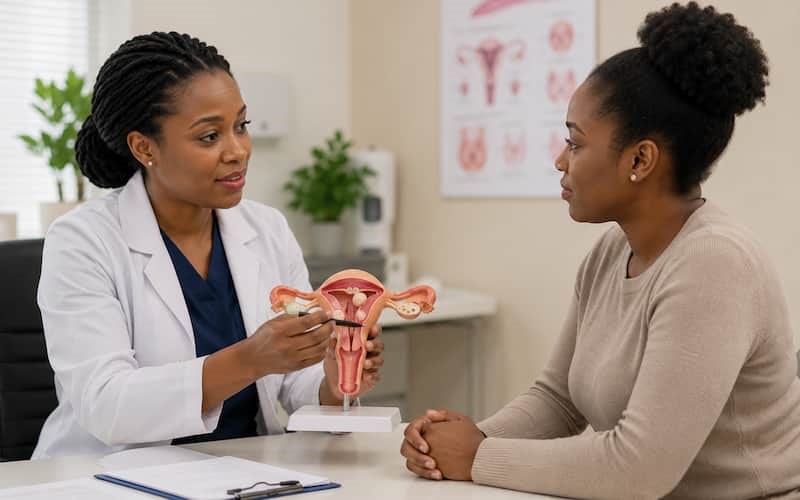
If you become pregnant with fibroids, the good news is that most pregnancies involving fibroids are uncomplicated. Research shows that between 70 and 90 percent of women with fibroids have completely normal, uncomplicated pregnancies. Most fibroids do not cause problems during pregnancy — and some actually shrink as the pregnancy progresses.
That said, complications are more likely when fibroids are large (over 5cm), multiple, or sitting in the lower segment of the uterus. It is worth knowing what to look out for, not to scare you, but so you feel informed and prepared.
Possible Complications to Be Aware Of
- Preterm birth — risk is modestly increased, particularly with multiple or large fibroids
- Malpresentation — fibroids can affect how the baby positions itself in the womb
- Placental abruption — the placenta separating from the uterine wall earlier than it should
- Placenta praevia — the placenta lying over or near the cervix
- Higher rate of caesarean section
- Postpartum haemorrhage — heavier bleeding after delivery
Red Degeneration — What Is It and Should You Worry?
Red degeneration is actually the most common fibroid complication during pregnancy, occurring in up to 8 percent of pregnant women with fibroids. It happens when a fibroid grows faster than its blood supply can keep up with and begins to break down internally. Symptoms include sudden, localised abdominal pain, fever, and nausea — usually in the second trimester.
Red degeneration is manageable with rest and pain relief, and it typically resolves on its own without any intervention. Your medical team will monitor you closely if this happens.
How Do Fibroids Behave During and After Pregnancy?
Many fibroids actually shrink or stay the same size during pregnancy, rather than growing. After delivery, fibroids often reduce in size naturally — particularly during breastfeeding, when oestrogen levels are lower. Many women find that fibroids that were present during pregnancy are significantly smaller or barely detectable at their postpartum check.
Talking to Your Doctor About Fibroids and Fertility
Before you start trying to conceive — or if you have been trying for a while without success — it is worth having a dedicated conversation with your gynaecologist or a fertility specialist about your fibroids and fertility outlook. Go prepared with the following questions:
- What type and size are my fibroids?
- Do any of them distort my uterine cavity?
- Should I consider treatment before trying to conceive?
- What fertility-preserving options are available to me?
- How will you monitor my pregnancy if I conceive with fibroids?
- Are there lifestyle changes that could support my fertility alongside treatment?
The Bottom Line
Fibroids do not automatically prevent pregnancy. The type, size, and location of your fibroids matter far more than the diagnosis alone — and even then, most women with fibroids go on to conceive naturally and carry healthy pregnancies to term.
What matters most is that you do not try to navigate this alone. Get an accurate diagnosis, understand your specific fibroid type, and have an honest conversation with a specialist about your options.
Understanding the relationship between fibroids and fertility is not about preparing for bad news. It is about making informed decisions with clarity, confidence, and the right answers to your questions.
You are not starting from zero. You are starting informed.
Fibroids and Fertility: Frequently Asked Questions
Q: Can you get pregnant naturally with fibroids?
Answer: Yes. Most women with fibroids conceive naturally and have healthy pregnancies. Fibroids are the sole cause of infertility in only 2 to 4 percent of women. The type and location of the fibroid matters far more than the diagnosis itself — submucosal fibroids carry the highest risk of affecting conception, while subserosal fibroids rarely impact fertility at all.
Q: Which type of fibroid is most likely to affect fertility?
Answer: Submucosal fibroids — those that grow inside the uterine cavity — have the strongest evidence for reducing fertility. They can interfere with embryo implantation and increase the risk of miscarriage. Intramural fibroids may also affect fertility if they are larger than 5cm or distort the uterine cavity. Subserosal fibroids generally do not affect fertility.
Q: Which type of fibroid is most likely to affect fertility?
Answer: Submucosal fibroids — those that grow inside the uterine cavity — have the strongest evidence for reducing fertility. They can interfere with embryo implantation and increase the risk of miscarriage. Intramural fibroids may also affect fertility if they are larger than 5cm or distort the uterine cavity. Subserosal fibroids generally do not affect fertility.
Q: Should I have fibroids removed before trying to conceive?
Answer: Not necessarily. The decision depends on your fibroid type, size, location, symptoms, and fertility history. Removal is typically recommended when:
- Submucosal fibroids are distorting the uterine cavity
- Fibroids larger than 5cm are affecting the cavity
- There is a history of recurrent miscarriage linked to fibroid location
Small fibroids not affecting the cavity can often be monitored rather than removed.
Q: Can fibroids affect IVF success?
Answer: Yes, in some cases. Fibroids that distort the uterine cavity are most likely to negatively impact embryo implantation and IVF success rates. In these cases, removing the fibroid before IVF may improve outcomes. A fertility specialist can advise whether fibroid treatment should be part of your IVF plan.
Q: What happens to fibroids during pregnancy?
Answer: Most fibroids remain stable or shrink during pregnancy. Between 70 and 90 percent of pregnancies with fibroids are uncomplicated. However, large or multiple fibroids can increase the risk of preterm birth, malpresentation, placental complications, and caesarean section. Red degeneration — when a fibroid outgrows its blood supply — can cause sudden pain in the second trimester but is manageable with rest and pain relief.