How to Lose Weight in Nigeria Without Giving Up Your Favourite Foods

As a Nigerian, if you have ever tried to lose weight following advice on food choices you found on foreign websites, you already know it seemed impossible because the tips were written for someone with access to foods like avocado toast and Greek yoghurt, and to a gym membership, not for someone eating eba, jollof rice, and egusi soup.
Here is the truth: you do not need to abandon Nigerian food to lose weight. You need to understand how your food works, which parts to adjust, and which habits are quietly making you add extra weight without you realising it.
This how to lose weight in Nigeria guide was written specifically for Nigerians. It uses food you actually eat, habits you can realistically adopt, and advice that makes sense for the Nigerian lifestyle — busy schedules, limited gym access, and all.
📝 Note: This post on how to lose weight in Nigeria is for general wellness information. If you have an underlying health condition affecting your weight, please consult a doctor before making significant dietary changes.
Why Losing Weight in Nigeria Feels Hard
Before we talk about solutions, let us be honest about why weight loss in Nigeria is genuinely difficult. It is not a lack of willpower but rather a combination of diet, culture, and environment that most weight loss advice does not account for.
Our Diet Is Carb-Heavy by Default
The average Nigerian plate is built around carbohydrates — rice, yam, eba, fufu, plantain, bread. These foods are filling, affordable, and deeply cultural. They are not the enemy, but eating them in large quantities multiple times a day creates a calorie surplus that, over time, leads to weight gain.
Portion Sizes Are Cultural
In Nigerian culture, a full plate is a sign of generosity and enjoyment. Eating a small portion can feel wasteful — or invite concern from the people around you. This cultural relationship with food means that portion control is not just a dietary challenge; it is a social one.
Gym Culture Is Not Accessible for Everyone
Gym memberships in Nigeria are expensive relative to average income. Many neighbourhoods do not have safe walking routes or public exercise spaces. This is a real barrier — but as you will see later in this guide, it is not an insurmountable one.
The ‘Healthy Food’ Cost Perception
There is a widespread belief that eating healthy costs more money. Salads, oats, and protein shakes are seen as expensive imports. In reality, some of the best weight loss foods in Nigeria — beans, garden eggs, vegetables, fish — are among the most affordable foods available. The perception is the barrier, not the cost.

The Simple Truth about Weight Loss
Weight loss happens when you burn more calories than you consume. That is the science of it.
Your body needs a certain number of calories each day to function — to breathe, pump blood, and keep you alive. This is called your basal metabolic rate. Everything else you eat above that number, your body stores as fat. When you eat below that number consistently, your body starts using stored fat for energy — and you lose weight.
You do not need to count every calorie obsessively. But you do need to understand that the amount of food you eat matters, not just the type of food.
The Key Insight
The goal is not to eat less Nigerian food.
The goal is to eat Nigerian food in a way that creates a modest calorie deficit.
Small, consistent reductions in portion size and being mindful of your food choices will help you lose weight.
Nigerian Foods That Help You Lose Weight
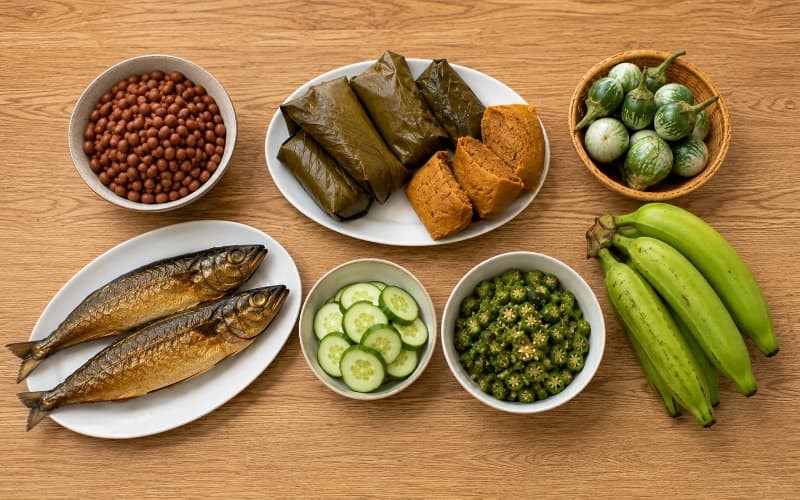
These everyday Nigerian foods are your weight loss allies — filling, nutritious, and naturally lower in calories.
1. Beans and Moi Moi
Beans are among the most effective weight-loss foods available in Nigeria — and one of the cheapest. They are high in protein and fibre, keeping you full for longer and reducing the urge to snack. A plate of beans and plantain is genuinely satisfying and significantly lower in calories than a plate of white rice and stew. Moi moi (steamed bean pudding) is an excellent swap for heavier sides.
2. Oats
Oats are underused in the Nigerian diet and deserve far more attention. A bowl of oats in the morning keeps you full until midday, stabilises your blood sugar, and is one of the lowest-calorie breakfast options available. Prepare it with water or low-fat milk, add a banana or a pinch of cinnamon, and you have a genuinely powerful breakfast.
3. Vegetable Soups — Okra, Ewedu, and Afang
Vegetable-based soups like okra soup, ewedu, and afang are naturally low in calories when prepared without excessive palm oil and meat fat. Pair them with a smaller portion of swallow, and you have a balanced, nutrient-dense meal. The vegetables provide fibre, vitamins, and minerals that support your metabolism.
4. Unripe Plantain
Unripe plantain is significantly lower in sugar than ripe plantain and has a lower glycaemic index — meaning it does not spike your blood sugar as quickly. Boiled or roasted unripe plantain is an excellent complex carbohydrate for weight loss. It is filling, nutritious, and widely available.
5. Garden Egg, Cucumber, and Tomatoes
These are the unsung heroes of the Nigerian weight loss diet. Garden eggs (African eggplant) are extremely low in calories, high in fibre, and filling. Cucumber is mostly water and has almost no calories. Tomatoes are rich in antioxidants and very low in calories. These can be eaten as snacks, added to stews, or used to bulk up meals without adding significant calories.
6. Fish — Fresh, Dried, or Smoked
Fish is one of the best sources of lean protein in Nigeria — affordable, widely available, and culturally embedded in Nigerian cooking. Protein is essential for weight loss because it preserves muscle mass, keeps you full, and requires more energy to digest than carbohydrates or fat. Mackerel (titus), sardines, catfish, and tilapia are all excellent choices.
Nigerian Foods to Eat Less Of
The following foods are not bad — but they are easy to overeat and can silently prevent weight loss without you realising it.
White Rice
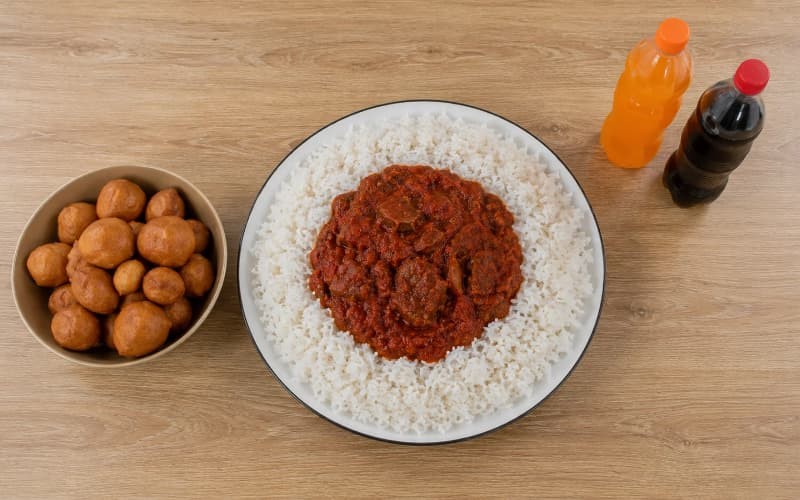
White rice is the most widely consumed grain in Nigeria and also one of the easiest foods to overeat. A typical restaurant or home serving of rice can contain 600 to 900 calories — before stew is added. You do not need to stop eating rice. Reduce the portion, increase the vegetable content of your stew, and consider swapping some servings for ofada rice or brown rice, which are higher in fibre and more filling.
Eba, Fufu, and Pounded Yam
Swallow is not the issue — the portion is. A responsible portion of eba or fufu is about the size of a tennis ball, paired with a generous serving of vegetable-rich soup. Most Nigerian servings are two to three times that size. Simply reducing your swallow portion while increasing the soup component of your meal is one of the most impactful changes you can make.
Soft Drinks, Malt, and Juice
This is the biggest hidden source of weight gain in the Nigerian diet. A single bottle of Coke contains around 140 calories. A bottle of malt contains 200 to 250 calories. If you drink two of these daily, that is up to 500 extra calories — over a month, that is equivalent to gaining roughly 2kg purely from drinks, without changing any food. Replacing sugary drinks with water, zobo without sugar, or fresh fruit is one of the fastest changes you can make.
Nigerian Fried Snacks — Puff Puff, Buns, and Chin Chin
These snacks are calorie-dense and extremely easy to overconsume. A handful of chin chin or two puff puff at a party feels harmless but can add 300 to 500 calories before your main meal. They are not off-limits, but they should be an occasional treat, not a daily habit.
Excess Palm Oil
Palm oil is a staple of Nigerian cooking and is not inherently unhealthy in moderate amounts. The issue is quantity. Many Nigerian recipes use significantly more palm oil than necessary. Gradually reducing the amount in your cooking — without eliminating it — can meaningfully reduce your daily calorie intake without changing the taste of your meals significantly.
A Simple Nigerian Meal Plan for Weight Loss
This Nigerian weight-loss meal plan is a 5-day sample that uses everyday Nigerian foods. It is one of the most practical answers on how to lose weight in Nigeria without complicated recipes. Portions matter: keep swallow to tennis-ball size, keep rice to half a plate.
| MONDAY | Breakfast: Oats with banana or boiled potatoes with vegetable sauce| Lunch: Any vegetable-containing soup + small eba | Dinner: Beans and plantain |
| TUESDAY | Breakfast: 2 boiled eggs + 2 slices of bread stuffed with vegetable fillings (cabbage, carrots, fresh tomatoes and cucumber, or just avocado) + tea (no sugar, use less milk) | Lunch: Any vegetable-containing soup + small swallow portion | Dinner: Pepper soup (light) + unripe plantain or white rice (local rice, not foreign) |
| WEDNESDAY | Breakfast: Moi moi + pap (less sugar or none) | Lunch: Any vegetable-containing soup with a small portion of swallow | Dinner: Local or Ofada rice + vegetable stew + fish |
| THURSDAY | Breakfast: Oats + groundnut | Lunch: Beans porridge | Dinner: Beans porridge (you can add dry fish or grilled fish) or yam porridge with plenty of vegetables + fish |
| FRIDAY | Breakfast: Boiled yam + garden egg sauce or egg sauce (using fresh tomatoes) | Lunch: Any vegetable-containing soup + small swallow | Dinner: Light portion of rice + protein (fish or chicken) + cucumber |
📝 Note
Drink at least 8 glasses of water daily. Cut soft drinks and malt completely or reduce to once a week. Snack on fruits, garden eggs, or groundnuts rather than fried snacks.
How to Lose Weight Without a Gym in Nigeria
One of the biggest misconceptions about how to lose weight in Nigeria is that you need a gym. You do not. Diet accounts for roughly 80 percent of weight loss results. Physical activity accelerates results and improves your health — but it does not have to come from a gym membership.
Walking — Free, Underrated, and It Works
A 30-minute brisk walk burns between 150 and 200 calories. Walk short distances instead of taking a keke. Go on a walk in the evenings. Take the stairs instead of the lift. These small changes accumulate meaningfully over weeks and months.
Household Activities Count
Sweeping, mopping, washing clothes by hand, cooking, and fetching water (if needed) are all physical activities that burn calories. If you do these consistently, you are already more active than you think. The goal is to become intentional about it — move more throughout the day.
Simple Home Exercises with No Equipment
- Jumping jacks — 3 sets of 20 (burns approximately 8 calories per minute)
- Bodyweight squats — 3 sets of 15 (strengthens legs and burns fat)
- Plank — hold for 30 seconds, 3 rounds (core strengthening, no equipment)
- Push-ups — 3 sets of 10 (upper body and core)
- High knees — 1 minute (equivalent to jogging in place)
📝 Note
Even 20 minutes of home exercise 4 times a week will produce results when combined with improved eating habits. You do not need to train like an athlete, you only need to be consistent.

Weight Loss Tips That Actually Work for Nigerians
1. Cut Soft Drinks First — Before Anything Else
If you make only one change from this entire guide, make it this one. Removing soft drinks, malt, and sugary juice from your daily routine can eliminate 300 to 500 calories per day without changing a single meal. Replace with water, zobo without sugar, or plain lemon-infused water.
2. Eat Smaller Portions Using the Plate Method
Divide your plate mentally into thirds: one third protein (fish, chicken, beans), one third vegetables (any soup, salad, or cooked vegetables), one third carbohydrate (reduced portion of rice, swallow, or yam). This simple method works to make sure you stick to small portion sizes.
3. Stop Eating After 8 pm
Late-night eating is one of the most common contributors to weight gain. After 8 pm, metabolism slows, and food eaten is more likely to be stored as fat, particularly if you are not active afterwards. This is one of the easiest habits to change with the biggest impact.
4. Drink Water Before Every Meal
Drinking a full glass of water 15 to 20 minutes before eating reduces appetite and helps you to eat less without feeling deprived. Many Nigerians are chronically dehydrated — and thirst is frequently mistaken for hunger. Increase your water intake before you change anything else.
5. Sleep More Than You Think You Need
Poor sleep raises the hormone ghrelin (which makes you hungry) and reduces leptin (which tells you that you are full). Nigerians who sleep less than 6 hours consistently report higher appetite and greater difficulty losing weight. Aim for 7 to 8 hours. This is not optional — it is physiological.
6. Ignore Weight Loss Products Sold on Social Media
The Nigerian market is flooded with weight loss teas, detox drinks, slimming capsules, and body wraps. The overwhelming majority of these products are unregulated, ineffective, and some are dangerous. Real weight loss requires no product. Save your money.
Frequently Asked Questions
What Nigerian food makes you lose weight?
Foods like beans, moi moi, oats, vegetable soups (okra, ewedu, afang), unripe plantain, fish, and garden eggs are excellent for weight loss. They are filling, nutrient-dense, and naturally lower in calories than heavy carbohydrate-based meals.
Can I lose weight eating swallow?
Yes. The key is portion size. A smaller portion of swallow (about the size of a tennis ball) paired with a vegetable-rich soup and a good protein source is a balanced, satisfying meal that fits a calorie deficit. Swallow should not be avoided — a mountain of swallow should.
How long does it take to lose weight in Nigeria?
With consistent dietary changes, most people begin to notice results within 4 to 8 weeks. Healthy, sustainable weight loss is 0.5 to 1kg per week. If you are losing weight faster than this, it is likely water weight or muscle — not fat. Slow and steady wins this race.
Do I need supplements to lose weight in Nigeria?
No. The vast majority of weight loss supplements sold in Nigeria are unregulated and unnecessary. Real food changes and consistent activity are far more effective and infinitely safer than any supplement. Do not spend money on products that do not work.
Is it possible to lose weight without exercise in Nigeria?
Yes — weight loss is primarily driven by diet. Reducing calories through smarter food choices alone can produce weight loss. That said, engaging in light physical activity like daily walking significantly improves results, supports your mental health, and protects your muscles during weight loss.

The Bottom Line
- Losing weight in Nigeria is less difficult than imagined, and you do not have to suffer through bland foreign diet plans to do it.
- Start with what you can control today.
- Cut soft drinks
- Reduce your rice portion
- Swap one meal a week for beans
- Drink more water Walk 20 minutes three times a week
These are not dramatic changes. But compounded over 90 days, they produce real results.
Your food is not the problem, but your portions, your drinks, and your habits are the levers. If you diligently do the needful, you’ll begin to see results in no time.