Uterine Fibroids Symptoms: Is It Fibroids or Something Else?
If you are a woman, there is a high chance you have heard the word fibroids at some point. Maybe a friend told you about them. Maybe your doctor mentioned them during a check-up. Or maybe you are experiencing strange symptoms right now and are wondering: Could this be fibroids? Or is it something else? You are not alone. Many women ask the same question every day.
In this article, we will walk you through everything you need to know about uterine fibroids symptoms. You will learn what fibroids are, why they cause certain symptoms, how to tell them apart from other conditions, when to see a doctor, and how doctors diagnose fibroids.
What Are Uterine Fibroids?
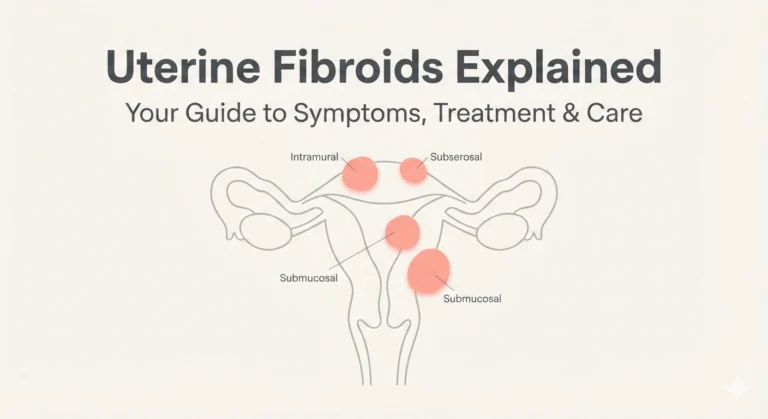
Uterine fibroids are non-cancerous growths that develop inside or around the uterus (the womb). Think of them as lumps of muscle and tissue that grow on the wall of the uterus. They are not cancer, and they do not increase your risk of cancer.
Fibroids can be as small as a pea or as large as a melon. Some women have just one fibroid. Others have many.
Fibroids are very common. In fact, studies show that up to 70–80% of women develop uterine fibroids by the time they reach age 50. However, fibroids are also very common among younger women of childbearing age — typically between 20 and 40 years old. Yet many women do not even know they have them because they have no symptoms. But when uterine fibroids symptoms do appear, they can be uncomfortable, painful, or even scary. For more information, visit MedlinePlus’s page on uterine fibroids.
Why Do So Many Women Ignore Uterine Fibroids Symptoms?
Many women grow up believing that heavy periods, period pain, and bloating are “normal.” This is not true. Here is the truth
- Normal periods last 3 to 7 days.
- Normal bleeding does not soak through a pad every hour.
- Normal pain goes away with rest or simple painkillers.
If your period disrupts your every day activities — you cannot go to work, you cannot sleep, you feel uncomfortable leaving your house — that is not normal. That is a sign something may be wrong, and fibroids are one possible cause. Do not ignore your body’s signals.
Why Do Fibroids Cause Symptoms?
To understand why fibroids cause certain symptoms, you need to understand two things: pressure and bleeding.
Pressure: As fibroids grow, they push against nearby organs like the bladder, bowel, or rectum. This pressure causes pain, bloating, and problems with urination or bowel movements.
Bleeding: Fibroids can affect the lining of the uterus and interfere with normal blood flow. This leads to heavy, long, or irregular periods.
Uterine Fibroids Symptoms
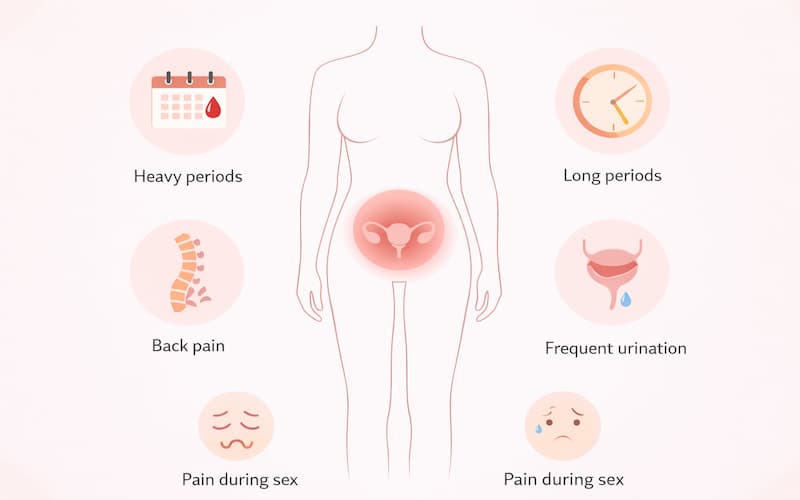
1. Heavy Menstrual Bleeding (Menorrhagia): This is the most common uterine fibroids symptom. Your period may be so heavy that you need to change your pad or tampon every hour. You may also pass large blood clots.
Why this happens: Fibroids increase the surface area of the uterine lining and interfere with the blood vessels. This causes heavier and longer bleeding. The Cleveland Clinic offers a comprehensive overview of fibroid symptoms and treatment options.
2. Long Periods: A normal period lasts between 3 and 7 days. With fibroids, your period may last 8, 10, or even 14 days.
Why this happens: The fibroids prevent the uterus from contracting properly, which makes it harder to stop the bleeding.
3. Bleeding Between Periods: You may notice spotting or light bleeding even when it is not your time of the month.
Why this happens: Fibroids can cause inflammation in the uterus, leading to irregular shedding of the lining.
4. Pelvic Pain or Pressure: You may feel a dull ache or heavy feeling in your lower belly. It may feel like something is pushing down.
Why this happens: As fibroids grow, they take up space and press on other organs.
How Uterine Fibroids Symptoms Are Different From Other Conditions
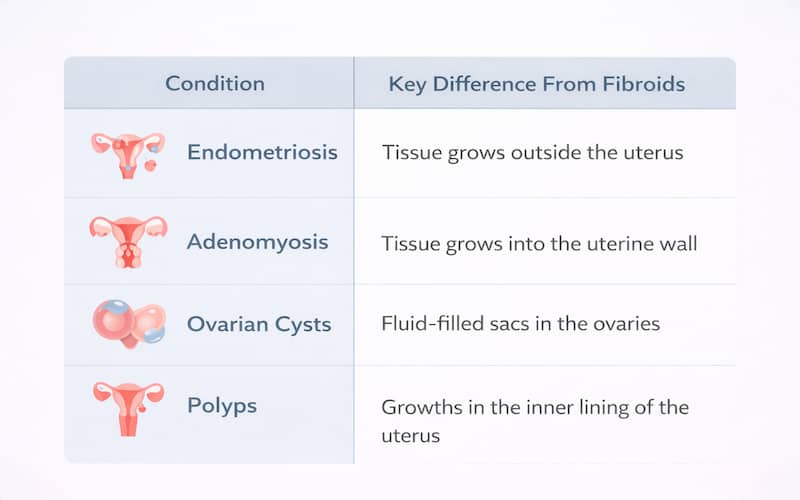
| CONDITION | KEY DIFFERNCES FROM FIBROIDS |
| Endometriosis | Tissue similar to uterine lining grows outside the uterus, causing severe period pain and pain during bowel movements. |
| Adenomyosis | The uterine lining grows into the muscle wall of the uterus, causing very painful, heavy periods. |
| Ovarian cysts | Fluid-filled sacs on the ovaries. They can cause sharp pain on one side of the lower belly. |
| Polyps | Small, finger-like growths inside the uterus. They cause bleeding but rarely cause pressure symptoms. |
This is how the above conditions can be differed from Uterine fibroids symptoms. Only a doctor can tell these apart using imaging tests like ultrasound or MRI.
When Should You See a Doctor?
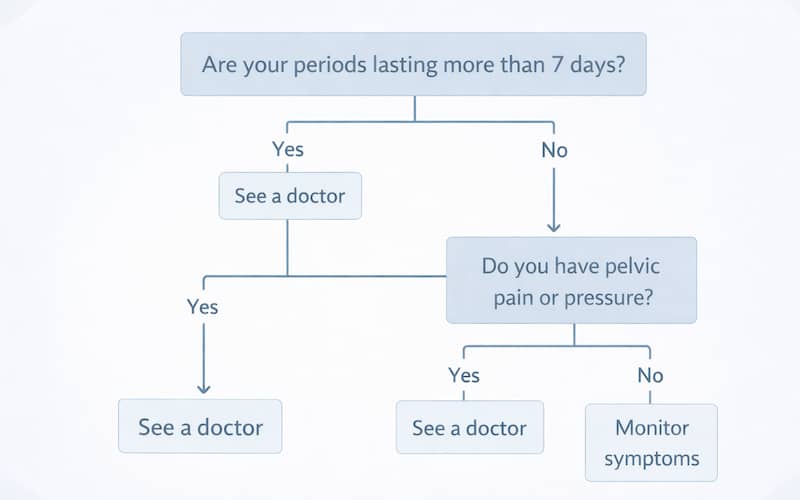
Now that you know the different uterine fibroids symptoms, do not wait. See a doctor if you experience any of the following:
- Your period lasts more than 7 days
- You soak through one or more pads or tampons every hour
- You pass blood clots larger than a grape
- You feel dizzy, weak, or tired during your period
- You have pelvic pain that does not go away
- You feel a lump or mass in your belly
- You have trouble emptying your bladder or bowel
- You bleed between periods or after sex
- Your symptoms are stopping you from living your normal life
The earlier you see a doctor, the easier it is to manage fibroids.
How Do Doctors Diagnose Fibroids?

If your doctor suspects fibroids, they will use one or more of the following tests.
1. Pelvic Exam: This includes both the speculum and bimanual exam.
The Speculum Exam: A plastic or metal device is inserted to open the vaginal walls so the doctor can see the cervix.
The Bimanual Exam:The doctor inserts one or two gloved fingers into the vagina while pressing on the lower belly with the other hand. This helps them check for any lumps that could be fibroids, and feel if the uterus is enlarged or irregularly shaped.
2. Ultrasound (Most Common): This is the first test most doctors order. A small device called a transducer is moved over the belly or placed inside the vagina. It uses sound waves to create images of the uterus. It shows size, number, and location of fibroids.
3. MRI (Magnetic Resonance Imaging): An MRI uses magnets and radio waves to create detailed images of the uterus. It is not always needed, but it is very helpful if you have many large fibroids or are planning surgery. It shows the exact map of fibroids, including size and depth.
4. Hysterosonography (Saline Infusion Sonogram): A small amount of sterile salt water is injected intothe uterus, and an ultrasound is done at the same time. This helps the doctor see fibroids inside the uterine cavity.
5. Hysteroscopy: A thin, lighted tube with a camera is inserted through the vagina and cervix into the uterus. This allows the doctor to see fibroids directly.
6. Laparoscopy: A small camera is inserted through a tiny cut in your belly. This is usually done if the doctor needs to see fibroids outside the uterus.
None of these tests are painful, though some may cause mild discomfort. Your doctor will explain everything before starting.
Frequently Asked Questions (FAQ)
Q: Can I have fibroids without any symptoms?
ANSWER: Yes. Many women have fibroids and never know it. They are often found by accident during a routine checkup or pregnancy ultrasound.
Q: Do fibroids turn into cancer?
ANSWER: Almost never. Less than 1 in 1000 fibroids are cancerous. Having fibroids does not increase your risk of uterine cancer.
Q: Can fibroids affect pregnancy?
ANSWER: Some fibroids can make it harder to get pregnant or increase the risk of miscarriage. But many women with fibroids have normal, healthy pregnancies.
Q: Can fibroids go away on their own?
ANSWER: Fibroids usually shrink after menopause because estrogen levels drop. Before menopause, they rarely disappear without treatment.
Internal Links to Learn More
We have a lot more information to help you understand fibroids better.
- 👉 Read our central pillar post: Uterine Fibroids Explained: Your Central Guide to Symptoms, Treatment & Care
- 👉 Learn about the different treatment options for fibroids in our dedicated treatment post (coming soon).
External Links for More Reading
These trusted sources provide additional information on uterine fibroids:
- Mayo Clinic – Uterine Fibroids Symptoms
- World Health Organization (WHO) – Uterine Fibroids
- ACOG – Uterine Fibroids FAQ
- NIH – Uterine Fibroids Fact Sheet
What You Can Do Right Now
If you have any of the uterine fibroids symptoms we discussed, do not panic. Most fibroids are harmless and many do not need treatment. But you still need to know what is going on inside your body.
Here is what you can do today
- Track your symptoms – Write down your period dates, how heavy the flow is, and any pain or pressure you feel.
- Drink water and eat iron-rich foods – If you bleed heavily, eat more beans, spinach, eggs, and meat to prevent anemia.
- See a doctor – Even if you are not sure, a simple checkup can give you peace of mind.
- Ask questions – Do not be afraid to ask your doctor: “Could this be fibroids?”
Final Words
Uterine fibroids are not your fault. They are not caused by anything you did wrong. They are simply growths that appear in many women, especially during the years you have periods.
Some women live with fibroids and never need treatment. Others need help to manage the symptoms. Either way, you deserve to know what is happening in your body. Do not suffer in silence. Do not assume heavy bleeding is normal. Do not ignore pelvic pain.
Listen to your body, and talk to a doctor.
💬 Leave a Comment Below
Have you experienced any of these symptoms? Are you currently trying to find out if you have fibroids? Or do you have a succes story to share? Please leave a comment below. We reply to every comment and provide answers to your questions.
If you want to be notified of our upcoming posts, subscribe to our newsletter using the form in the footer below.
Share this post