What is Creative Writing? – 5 Forms of Creative Writing

If you think creative writing is only for people who want to publish novels or poetry, that’s not true. Creative writing is simply the act of using imagination to tell a story, explore an idea, or engagingly express a thought.
The Art of Building Worlds with Words
When people hear the term creative writing, they often imagine professional authors or complex storytelling techniques. That idea can make it seem intimidating or out of reach. In reality, creative writing is much more straightforward. It’s simply writing that uses imagination to share stories, ideas, or experiences in an engaging way.
Creative writing is the art of expressing ideas and emotions not just with facts, but with imagination, craft, and narrative flair. It’s about telling the truth, even if the story itself is fictional. Let’s break down this beautiful craft and discover why it’s not just a hobby, but a fundamental way of connecting to the world and to ourselves.
Beyond the Dictionary
A Deeper Definition
If you look up a textbook definition, you’ll usually find something like this: “Creative writing is a form of writing that uses imagination, creativity, and invention to tell a story.”
While that definition is accurate, it doesn’t fully explain what creative writing involves in practice. A more practical way to think about it is this: creative writing is the process of using imagination to create characters, situations, and experiences that come together as a story. It takes ideas, observations, and emotions and shapes them into something a reader can follow and connect with.
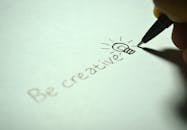
Unlike technical or academic writing, which focuses on facts and clarity, creative writing is more personal and imaginative. Its main goal isn’t just to inform—it’s to engage the reader, spark emotions, and make ideas or experiences feel real. It’s about creating stories, characters, or situations that people can connect with and remember.
The Many Forms of Creative Writing
A Tour of Creative Writing Genres
Creative writing isn’t just one thing—it covers a wide range of styles and forms. A “creative writer” could be a novelist, a poet, a screenwriter, or even someone who writes funny stories or reviews just for fun. Here are some of the most common types of creative writing.
5 FORMS OF CREATIVE WRITING
1. Fiction
Fiction
Fiction is the core of creative writing. It’s all about telling stories with made-up characters and events.
Flash Fiction: Very short stories that deliver a complete idea or moment in just a few hundred words or fewer, 1,000 words—a literary snapshot that demands precision and power.
Novels and Novellas: Longer stories that let you explore detailed plots and develop characters deeply.
Short Stories: Compact narratives that focus on a single idea, moment, or emotion. Every word matters.
2. Creative Non-Fiction
Here’s where things get interesting. This genre uses the tools of fiction (narrative, description, dialogue) to tell a true story.
- Memoir & Personal Essays: These are based on the writer’s own experiences. They go beyond recounting events. It’s not just “what happened,” but “what it meant.” Experiences that readers can relate to.
- Biographies
Biographies tell the story of a real person’s life, but they’re written like a story, with pacing and details that keep the reader engaged.
- Literary Journalism
Literary journalism combines reporting with storytelling. Writers like Joan Didion or John McPhee don’t just present the facts—they bring readers into the scene, showing the people, setting, and details that make the story feel alive.
3. Poetry
Poetry is a compact and musical way of writing. It uses rhythm, line breaks, and vivid images to express ideas and emotions clearly and powerfully. Instead of telling a story step by step, poetry focuses on capturing a feeling or idea in its purest form.
4. Scriptwriting (Drama)
This is writing meant for performance. It relies on dialogue and stage directions. The writer provides the blueprint, and actors and directors bring it to life.
Plays: For the theatre.
Screenplays: For film.
Teleplays: For television
5. Other Expressive Forms
- Song Lyrics: Song lyrics are where poetry meets music.
- Video Game Narratives: Video game narratives are the modern, interactive frontier of storytelling.
- Graphic Novels: Combining visual art with written narrative.
- The Core Elements: The Writer’s Toolkit, so what tools do you need to start building? While the genres differ, most creative writing shares a common set of foundational elements:
- Character: The heart of any story. Without a character to care about, even the most exciting plot falls flat. Great characters feel real—they have desires, flaws, and complexities.
- Plot: Plot is the sequence of events—the “what happens.” A strong plot is more than just a list of actions; it’s a chain of cause and effect shaped by the characters’ choices, usually built around conflict and resolution..
- The world of the story: The world of the story isn’t just a location. It includes the time period, weather, social environment, and overall atmosphere. A well-crafted setting can almost feel like a character itself.
- Point of View (POV): Point of View (POV) is the lens through which the story is told. Is it a first-person “I” narrator, a third-person narrator focused on one character, or an all-knowing, omniscient narrator? The POV you choose shapes the reader’s experience..
- Theme: Theme is the central idea or insight a story explores—the “so what?” Is it about love, loss, justice, or the corruption of power? Theme is what turns a story from a simple tale into a meaningful reflection on life.
- Style and Voice: Style and voice are your fingerprint as a writer. They’re your unique mix of word choice, sentence structure, and tone—the way your writing feels and sounds.
Why Creative Writing Matters (It’s Not Just About Getting Published)
In a world obsessed with productivity and metrics, why should we make time for making things up? The value of creative writing runs deep, for both the writer and the reader.
FOR THE WRITER
1. Self-Discovery and Catharsis: Writing is a form of thinking. By putting feelings and experiences into a narrative, we often discover them for the first time. It’s a way to process the world and our place in it
2. Empathy Building: To write a character, you must step into their shoes. You have to see the world from their perspective, understand their motivations, and justify their actions, even if you disagree with them. This is a profound exercise in empathy.
3. Sharpened Communication Skills: Creative writing forces you to be precise, vivid, and clear. You learn to choose the perfect word, not just an adequate one. This skill bleeds into every other form of communication in your life.
4. A Legacy of Stories: You are creating something from nothing. You are leaving a mark, a testament to your imagination and your unique view of the human experience.
FOR THE READER AND SOCIETY
1. A Mirror and a Window: Stories allow us to see our own lives reflected, making us feel less alone. They also act as windows into lives and experiences vastly different from our own, fostering cross-cultural understanding and compassion.
2. The Preservation of Humanity: Stories are how we pass down our collective wisdom, our fears, our joys, and our histories. They are the cultural DNA of our species.
3. Pure, Unadulterated Joy: Let’s not forget the simple, glorious escape of a good story. It’s a vacation for the mind, a source of comfort, and a catalyst for wonder.
You Are a Creative Writer
Dispelling the Myths
Let’s bust some of the biggest myths that hold people back.
Myth #1: “You have to be born with talent.”
Truth: Writing is a craft.
Talent might give you a head start, but discipline, practice, and a willingness to learn are what make a writer. You learn by doing, by reading, and by failing.
Myth #2: “You need a crazy, interesting life to have stories to tell.”
Truth: The most powerful stories often come from observing the small, quiet moments of everyday life.
The drama of a family dinner, the tension in a shared glance, the hope in a sunrise; these are your raw materials.
Myth #3: “You have to know everything about your story before you start.”
Truth: Most writers are “discovery writers” (or “pantsers”) who figure out the story as they write.
The magic often happens in the unexpected detours.
How to Begin Your Creative Writing Journey
Feeling inspired? Here’s how to take the first step
1. Read: Read voraciously. Read in your chosen genre and outside of it. Read like a writer. Notice how your favourite authors introduce characters, build suspense, or craft a beautiful sentence.
2. Write: Write consistently. Don’t wait for inspiration to strike. Set a small, achievable goal—200 words a day, 15 minutes a day. The key is consistency. Show up at the page, even when you don’t feel like it.
3. Embrace the “Shitty First Draft.” Anne Lamott coined this perfect term. Permit yourself to write badly. You can’t edit a blank page. The goal of the first draft is simply to exist.
4. Observe the World: Become a collector of details. Listen to how people talk on the bus. Notice the way light hits a building. Jot down interesting phrases and ideas in a notebook. Your life is your research.
5. Find Your Tribe: Join a writing group or an online community. Sharing your work and giving feedback to others is one of the fastest ways to improve.
Conclusion: The Invitation
So, what is creative writing? It’s an invitation. It’s an invitation to play, to explore, to remember, and to imagine. It’s a rebellion against the mundane, a celebration of the human spirit, and a bridge between one soul and another. It’s the scent of rain on earth in a poem, the terrifying grip of a thriller, the comforting voice of a memoir, and the silent hope of a blank page waiting for your story. You don’t need permission to start. You only need a pen, a bit of courage, and the willingness to begin your journey into the vast and rewarding world of creative writing. The world you build with your words is waiting.
Photo credit: https://www.pexels.com/@suzyhazelwood
If you enjoyed reading this, here is another creative post on content writing!